In this article
Many people want to move more in the morning but find that traditional exercise feels too demanding, especially first thing. This short Tai Chi Walking routine offers a middle path: gentle enough to do before breakfast, structured enough to give your body and mind a clear sense of purpose.
You do not need any Tai Chi experience to follow this routine. You need a clear space of roughly two metres in any direction, comfortable flat shoes or bare feet on a non-slip surface, and about ten minutes.
Some links on this site are affiliate links. If you buy through them we may earn a commission, at no extra cost to you.
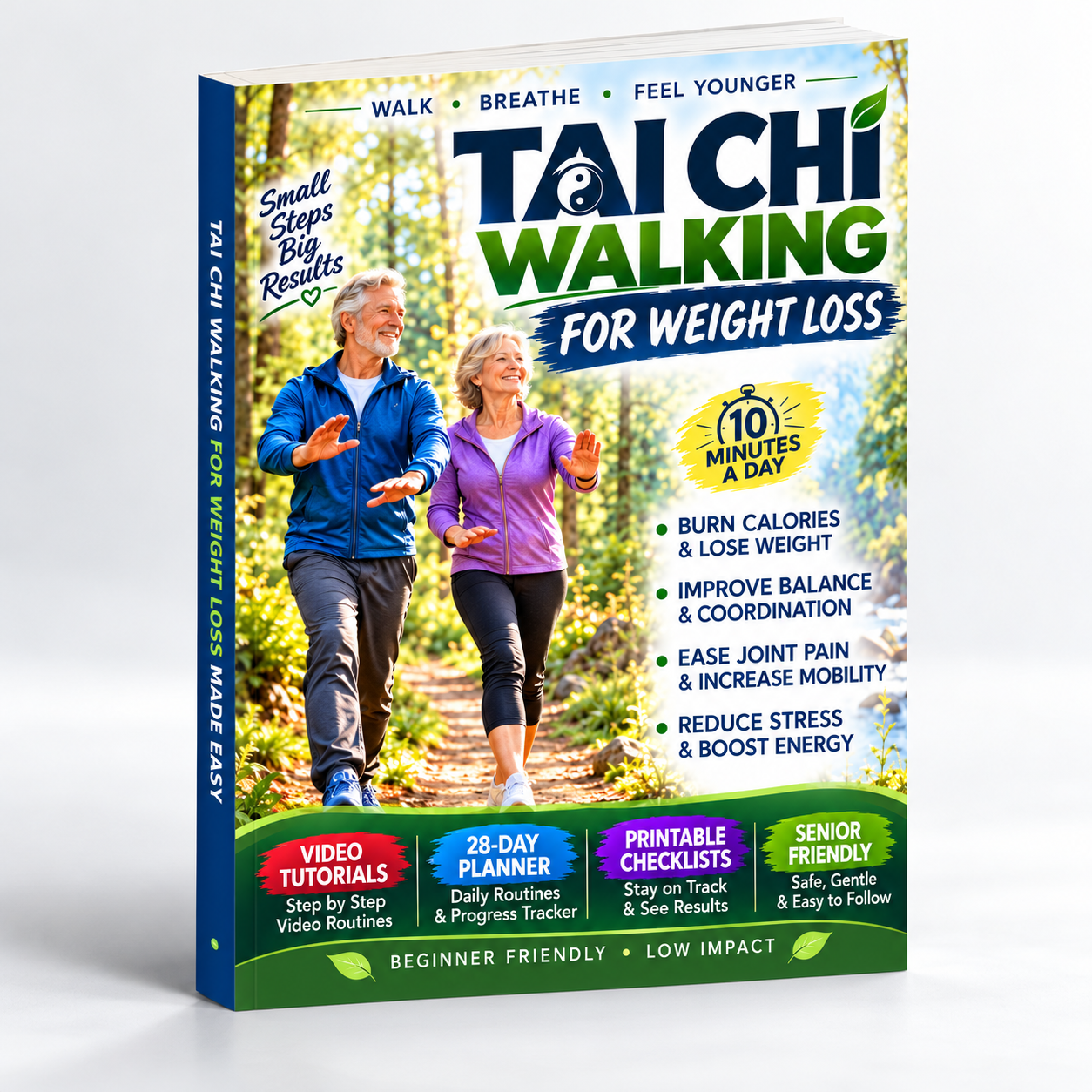
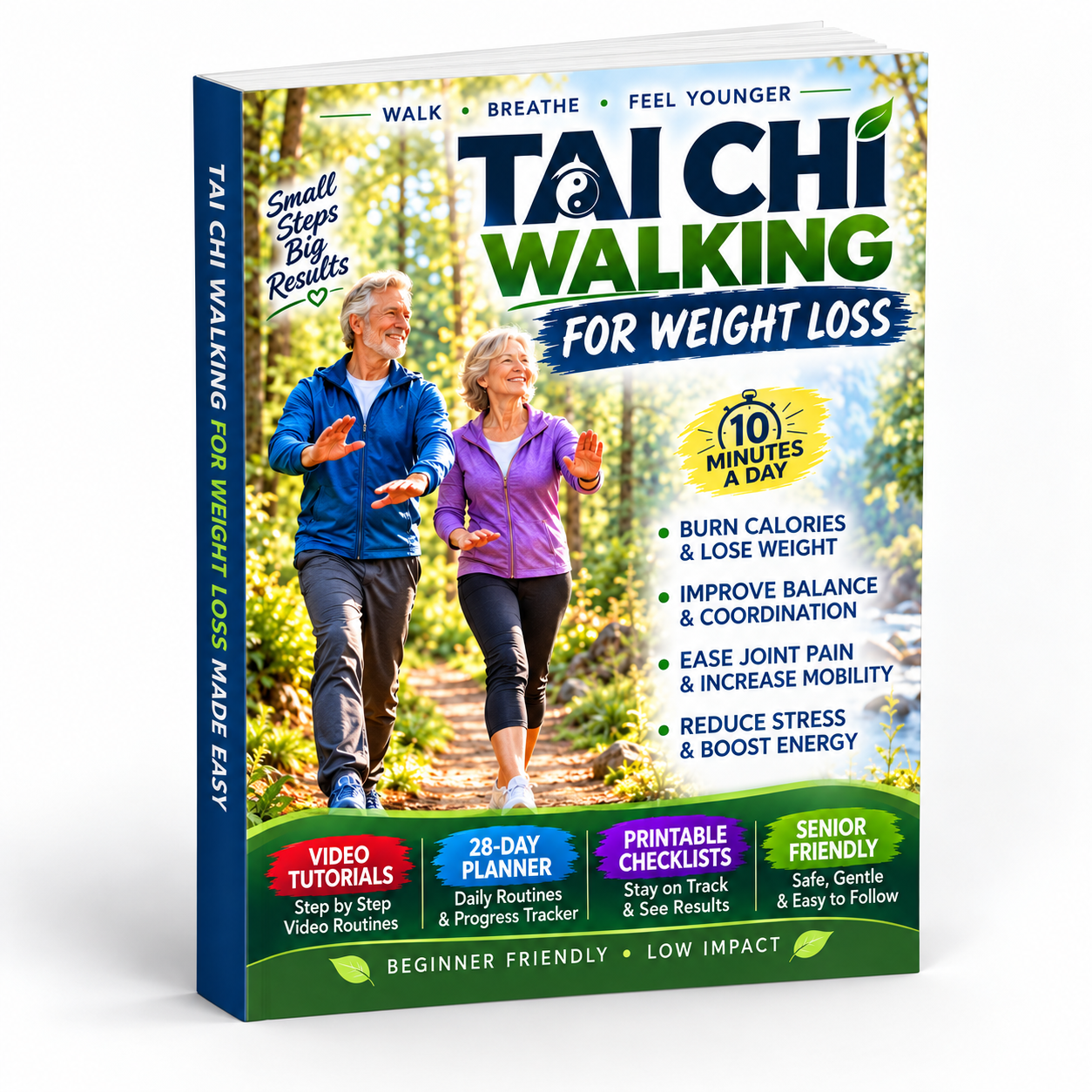
Tai Chi Walking Book
28-Day Illustrated Program for Pain Relief, Better Balance and Improved Mobility in Just 10 Minutes a Day
What Makes This Different from an Ordinary Morning Walk
Ordinary walking is largely automatic. You move from A to B without much thought about how your feet land, how your weight shifts, or how your arms relate to your steps.
Tai Chi Walking slows that process down deliberately. Each step is placed with attention. Weight transfers fully from one foot to the other before the next step begins. The arms move in gentle coordination with the legs. Breathing is slow and conscious. This is not about covering distance. It is about quality of movement, and that distinction matters for balance, joint health and calm.
Before You Begin: A Two-Minute Settling Practice
Rushing straight into movement from sleep is not ideal. Spend two minutes standing quietly, or sitting if you prefer.
- Stand with feet shoulder-width apart, knees very slightly soft, not locked.
- Let your arms hang loosely at your sides.
- Take three slow breaths, breathing in through the nose and out through the mouth.
- Gently roll your shoulders back once, then let them drop.
- Shift your weight slowly to the left foot, then back to centre, then to the right foot, then back to centre. Repeat this twice. This wakes up your ankles and reminds your body what balance feels like before you ask it to walk.
If standing for two minutes is uncomfortable, do this section seated in a firm chair and simply lift one heel at a time rather than shifting full body weight.
The Core Movement: Slow Step and Settle
This is the foundation of the routine and takes about five minutes.
- Stand at one end of your clear space.
- Shift your weight fully onto your left foot.
- Lift your right foot slowly and place it forward, heel first, toes pointing gently upward as the heel lands.
- Pause for one breath.
- Roll your weight forward onto the right foot until it is fully settled.
- Now lift the left foot and bring it forward in the same way.
- Keep your gaze soft and forward, not down at your feet.
- Let your arms swing naturally but lightly, not forced.
Walk to the end of your space, turn slowly by stepping in a small arc rather than pivoting sharply, and walk back. Repeat for five minutes. The pace should feel almost uncomfortably slow at first. That is correct. Speed is not the goal here.
Safety note: If your balance feels uncertain, walk alongside a wall or a sturdy piece of furniture so you can touch it lightly if needed. This is not a sign of weakness. It is good practice.
Adding Arm Awareness
Once the slow step feels natural, you can bring more intention to the arms. This does not need to look like formal Tai Chi. It is simply about coordination.
As your right foot steps forward, allow your left arm to drift gently forward at the same time, palm facing inward, elbow soft. As your left foot steps forward, the right arm drifts forward. This is the natural cross-pattern your body already uses when walking. Tai Chi Walking simply makes it conscious and slightly more deliberate.
Keep the movement small. The hand should not rise above hip height in this routine.
A One-Minute Closing Sequence
Ending with intention helps the body register that the practice is complete.
- Come to a standstill with feet shoulder-width apart.
- Place both hands lightly over your lower abdomen, one on top of the other.
- Take three slow breaths, feeling your hands rise and fall slightly.
- Let your arms return to your sides.
- Stand quietly for a moment before moving on with your morning.
This closing is drawn from the way many Tai Chi forms end, returning awareness to the body’s centre before transitioning back to ordinary activity.
How to Build This Into a Habit
Ten minutes is short enough that it rarely loses an argument with a busy morning. The challenge is not the duration but the consistency. A few practical suggestions:
- Do the routine before checking your phone or eating breakfast, so it happens before the day’s demands arrive.
- Keep your shoes near the spot where you practise so there is no small friction to overcome.
- If ten minutes is too much on a given morning, do just the two-minute settling practice. Partial practice is far better than no practice.
The 28-day approach in the Tai Chi Walking for Weight Loss book builds on exactly this kind of short daily routine, adding variety and progression gradually rather than all at once.
A Note on What to Expect
After a single session you may notice that your ankles feel more awake, your posture has shifted slightly, or your mind feels quieter than it did before you started. These are modest but real effects of slow, attentive movement.
Over days and weeks, the benefits tend to accumulate in ways that are harder to see but easier to feel: steadier balance, less stiffness in the morning, a growing sense of ease in how you carry yourself through the day.
This routine will not replace a broader approach to health, but it is a genuinely useful place to start, and for many people, a ten-minute morning practice is exactly the right size of commitment to actually keep.