In this article
If you have heard the term Tai Chi Walking and wondered what it actually means, you are not alone. It sounds a little mysterious at first. Is it Tai Chi? Is it just walking? The honest answer is that it sits somewhere between the two, and that in-between space is exactly what makes it useful for people who want gentle, low-impact movement without learning a complicated martial art.
This introduction explains the basics in plain language, with no jargon and no assumptions about your fitness level.
Some links on this site are affiliate links. If you buy through them we may earn a commission, at no extra cost to you.
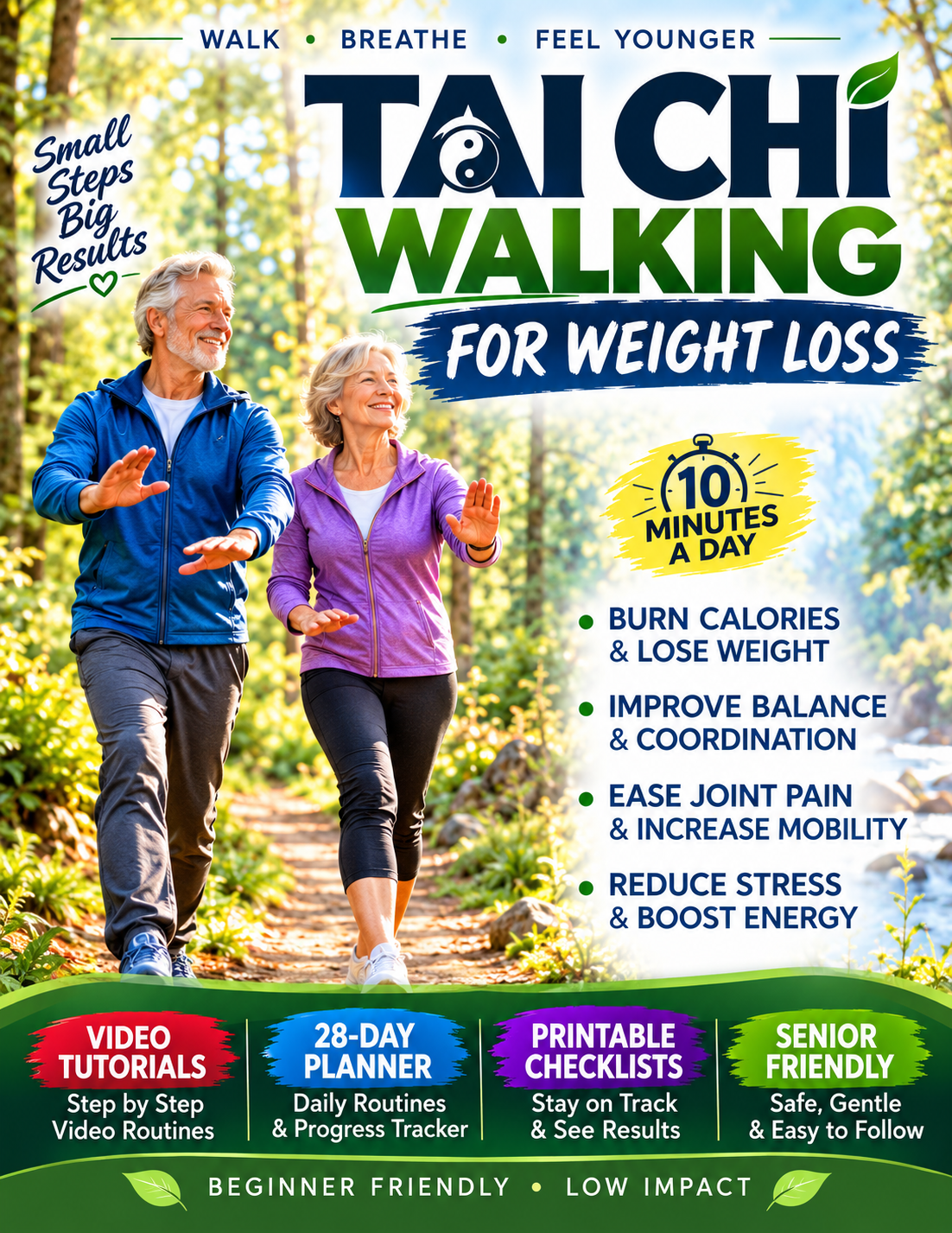
Tai Chi Walking Book
28-Day Illustrated Program for Pain Relief, Better Balance and Improved Mobility in Just 10 Minutes a Day
How Ordinary Walking and Tai Chi Walking Differ
When most people walk, they move on autopilot. The pace is brisk, the mind is elsewhere, and the body just carries them from one place to another. That kind of walking is fine, but it does not ask much of your balance, your posture, or your awareness.
Tai Chi Walking slows everything down on purpose. Each step is placed with care. Your weight shifts gradually from one foot to the other. Your arms, spine, and breath are all part of the movement rather than passengers along for the ride. The result is a walk that feels more like a moving meditation than a commute.
This slower, more deliberate approach is drawn directly from the stepping principles used in traditional Tai Chi forms, but it does not require you to learn any of those forms first.
The Core Principles Behind the Practice
A few ideas run through every Tai Chi Walking session, and understanding them helps the movement make sense.
Rooting. Before you step, you settle your weight fully into the standing foot. This gives you a stable base and trains the body to stop rushing.
Slow, conscious weight transfer. Instead of falling forward into the next step, you move your weight deliberately, feeling the shift from heel to ball of foot.
Soft knees. Keeping a slight bend in the knees protects the joints and lowers your centre of gravity, which improves balance.
Relaxed upper body. The shoulders drop, the hands hang loosely or move in gentle coordinated patterns, and the jaw unclenches. Tension is released rather than carried.
Breath awareness. You breathe naturally, but you notice it. Over time, breath and movement begin to coordinate without effort.
None of these principles require flexibility, strength, or prior experience. They only require attention.
Why It Is Particularly Suited to Seniors and Beginners
High-impact exercise puts stress on joints, raises the risk of falls during recovery, and can feel discouraging when the body does not respond the way it once did. Tai Chi Walking avoids all of that.
Because the movements are slow and low to the ground, the risk of losing balance is reduced rather than increased. Because there is no jumping, running, or heavy resistance, the joints are not compressed. And because the practice is built around awareness rather than performance, there is no pressure to keep up with anyone else.
For people returning to movement after illness, injury, or a long period of inactivity, Tai Chi Walking offers a way back in that does not feel like punishment.
What a Simple Tai Chi Walking Session Looks Like
A basic session does not need equipment, a large space, or much time. Here is what a short practice might include.
- Stand quietly for a moment. Feet hip-width apart, knees soft, arms at your sides. Take three slow breaths and let your shoulders drop.
- Shift your weight to one foot. Feel the ground beneath that foot before you do anything else.
- Step forward slowly. Place the heel of the leading foot down first, then roll gently through to the ball of the foot as your weight transfers forward.
- Pause at the moment of full weight transfer. Notice how it feels to be balanced over that foot.
- Continue for ten minutes. Keep the pace slow enough that you could stop at any point without stumbling.
That is the foundation. Everything else in Tai Chi Walking builds on those five steps.
A Note on Safety
If you have a balance condition, recent surgery, or any concern about starting a new movement practice, speak with your doctor or physiotherapist before beginning. Tai Chi Walking is gentle, but your individual circumstances matter.
When practising outdoors, choose a flat, even surface until you are comfortable with the technique. Indoors, clear a path of at least three or four metres so you can walk without stopping to navigate around furniture.
Wear flat, supportive shoes. Socks on a smooth floor are not safe for this practice.
How It Connects to Weight Management
Tai Chi Walking is not a high-calorie-burning workout in the way that running or cycling is. What it does is build a consistent movement habit, improve posture and muscle tone over time, and reduce the stress responses in the body that can contribute to weight gain. It also tends to make people more aware of how they feel physically, which often carries over into more mindful eating and rest habits.
The relationship between Tai Chi Walking and weight management is gradual and cumulative. Small, consistent sessions over weeks and months produce changes that a single intense workout cannot.
Getting Started Without Feeling Overwhelmed
The most common mistake beginners make is trying to do too much too soon. A ten-minute session done daily is more valuable than a forty-minute session done once a week and then abandoned.
Start with the basic stepping described above. Do it in your living room if that feels safer. Focus on one principle at a time, perhaps just the soft knees for the first few days, then add breath awareness, then the slow weight transfer. Build the practice layer by layer rather than all at once.
Conclusion
Tai Chi Walking is walking made mindful. It takes the ordinary act of putting one foot in front of the other and fills it with intention, balance, and calm. For beginners, seniors, and anyone who wants movement that supports rather than strains the body, it offers a genuinely accessible place to start. You do not need to be fit, flexible, or familiar with Tai Chi. You only need to be willing to slow down and pay attention.