In this article
Starting any new movement practice can feel uncertain, especially if you’ve had a fall, live with joint pain, or simply haven’t exercised in a while. Tai Chi Walking is designed with exactly that situation in mind. It draws on the slow, deliberate principles of Tai Chi and applies them to something you already do every day: walking. The result is a gentler, more mindful way to move that supports balance, mobility, and gradual weight management without strain or complicated sequences.
This guide walks you through how to begin safely, what to expect in the early days, and how to build from a few careful minutes into a steady, enjoyable routine.
Some links on this site are affiliate links. If you buy through them we may earn a commission, at no extra cost to you.
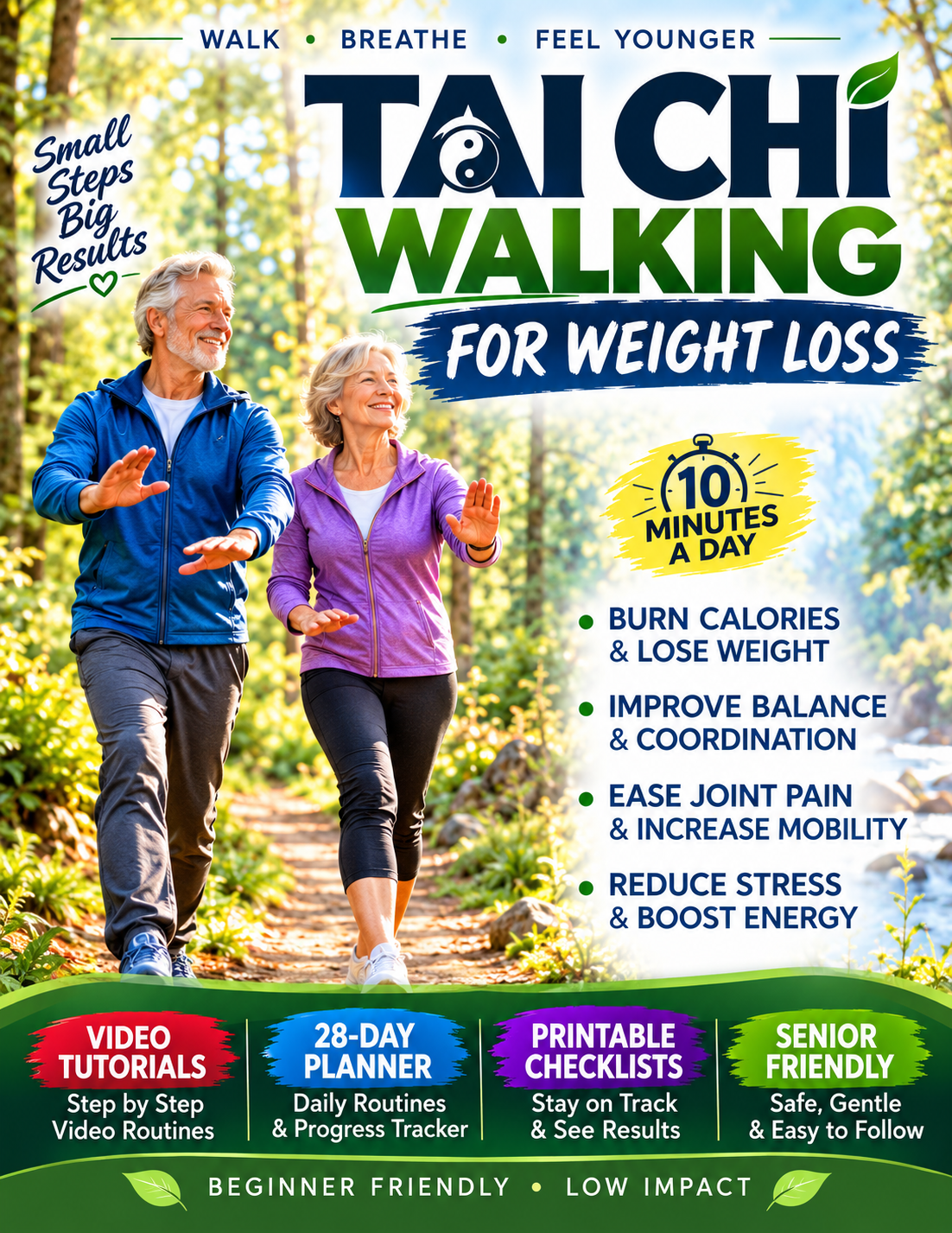
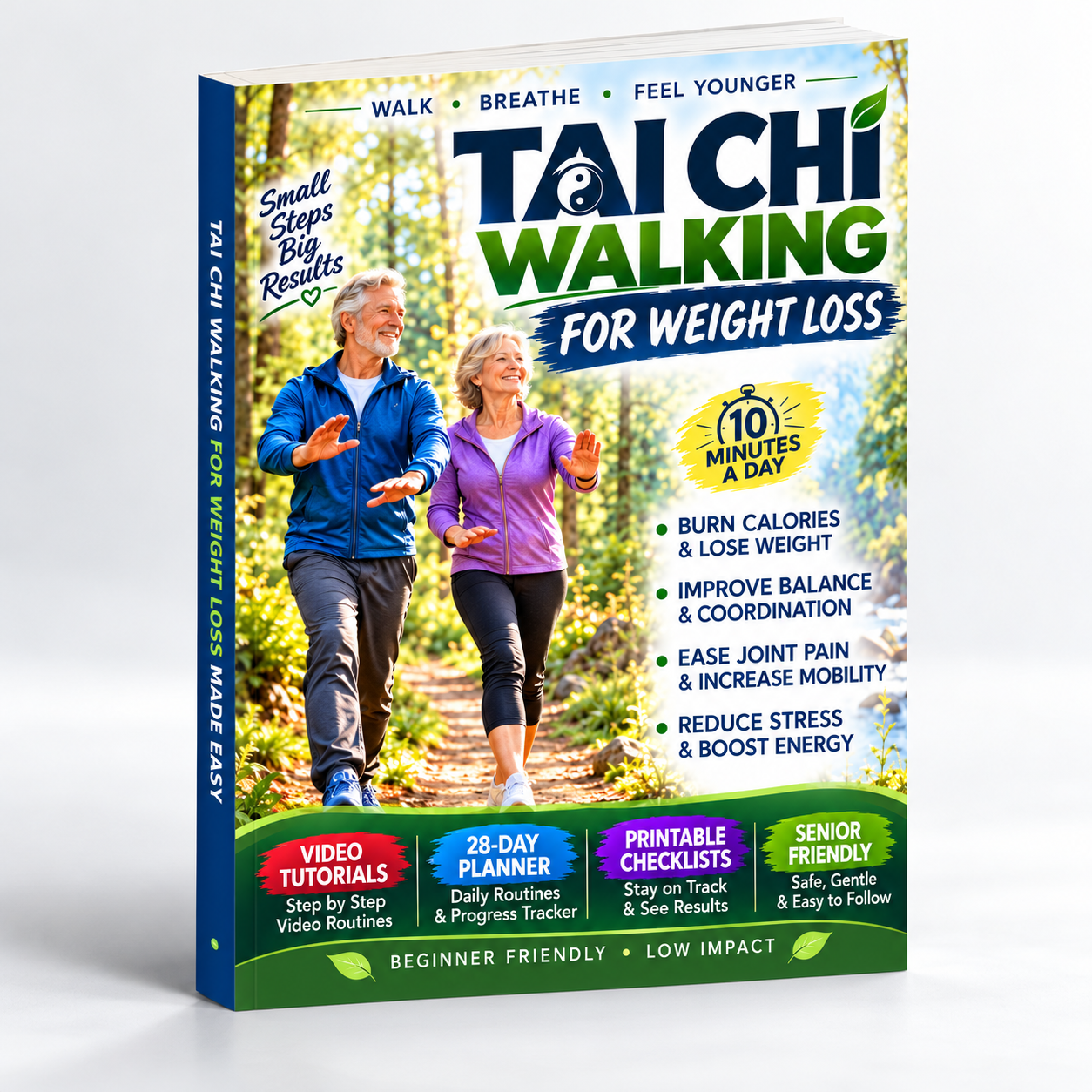
Tai Chi Walking Book
28-Day Illustrated Program for Pain Relief, Better Balance and Improved Mobility in Just 10 Minutes a Day
What Makes Tai Chi Walking Different from Ordinary Walking
Ordinary walking tends to be automatic. Most people move at a habitual pace without much attention to posture, weight transfer, or breathing. Tai Chi Walking slows that process down deliberately.
In Tai Chi Walking, each step involves conscious weight shifting from one foot to the other, a softened knee, an upright but relaxed posture, and coordinated breathing. The arms may move gently in rhythm with the steps, or they may rest quietly at your sides depending on the variation you’re practising.
This mindful quality is what makes it particularly well suited to seniors. Because you’re paying attention to each movement, your nervous system and muscles are engaged in a way that ordinary walking doesn’t always achieve. Over time, this builds the kind of body awareness that helps prevent falls.
Before You Take Your First Step
A few simple preparations make a real difference.
Choose your footwear carefully. Flat, close-fitting shoes with a thin sole give you better ground feedback than thick-soled trainers. Avoid slippers or shoes with a raised heel.
Pick a safe surface. Start indoors on a flat, uncluttered floor. A hallway or living room with furniture nearby for support is ideal. Avoid uneven ground, wet surfaces, or anywhere with loose rugs until you feel steady.
Have a chair within reach. This isn’t a sign of weakness — it’s simply sensible. Knowing support is available helps you relax, and relaxation is central to Tai Chi movement.
Check with your doctor if needed. If you have a recent injury, a balance condition, or are recovering from illness, a brief conversation with your GP or physiotherapist before starting is worthwhile.
Using Chair Support to Begin
One of the most practical ways for seniors to start Tai Chi Walking is with one hand resting lightly on the back of a sturdy chair. This gives you a reference point for balance without bearing your full weight.
Stand beside the chair, feet about hip-width apart. Soften your knees slightly — not a deep bend, just enough to release the lock. Let your shoulders drop. Take a slow breath in, and as you breathe out, shift your weight gently onto your right foot. Feel the sole of that foot press into the floor. Then slowly shift back to centre, and across to the left.
That simple weight transfer, done slowly and with awareness, is the foundation of Tai Chi Walking. Practise it for two or three minutes before attempting any forward movement. Once it feels natural, you can begin to lift one foot slightly and place it forward, continuing the same slow weight shift.
A Simple 10-Minute Starting Routine
For the first week or two, a short routine is more useful than a long one. Ten minutes of focused, careful movement builds the habit and the body awareness without fatigue.
- Minutes 1–2: Stand quietly with feet hip-width apart. Breathe slowly. Let your weight settle.
- Minutes 3–5: Practise the weight-shifting exercise described above, with or without chair support.
- Minutes 5–8: Take slow, deliberate steps forward along a clear path — perhaps six to eight steps — then turn carefully and return. Focus on each foot placement.
- Minutes 8–10: Return to standing. Breathe. Let your body settle before sitting down.
This structure appears in the 28-day approach outlined in Tai Chi Walking for Weight Loss, where each week builds gradually on the one before.
Pacing Yourself: The Most Common Mistake to Avoid
The most frequent mistake beginners make is moving too quickly. Tai Chi Walking should feel noticeably slower than your normal walking pace — slow enough that you can feel each weight shift clearly.
If you find yourself rushing, pause, take a breath, and restart. There is no target distance, no step count to hit in the early stages. The quality of each step matters far more than the number of steps taken.
Noticing Progress Without Pushing for It
Progress in Tai Chi Walking tends to be quiet and gradual. You might notice after a week or two that you feel steadier when standing up from a chair, or that you’re more aware of your posture during ordinary daily tasks. Some people find that their breathing feels calmer, or that they sleep a little better.
These small shifts are meaningful. They reflect genuine changes in body awareness and muscle engagement. Acknowledging them — even briefly — helps reinforce the habit.
A Note on Discomfort and When to Stop
Mild muscle awareness, particularly in the thighs and calves, is normal when you begin. Sharp pain, dizziness, or any feeling of instability is not. If any of these occur, stop, sit down, and rest. If they persist, seek advice before continuing.
Tai Chi Walking is low-impact by design, but low-impact does not mean zero-impact. Listening to your body is part of the practice.
Building from Here
Once the 10-minute routine feels comfortable and familiar — usually after one to two weeks for most beginners — you can begin to extend it gradually. Adding two or three minutes at a time, introducing gentle arm movements, or moving to a slightly longer walking path are all natural next steps.
The 28-day structure in Tai Chi Walking for Weight Loss provides a clear, week-by-week progression that takes this gradual approach seriously, so you’re never asked to do more than your body is ready for.
Starting slowly isn’t a compromise. For seniors beginning Tai Chi Walking, it’s the most direct route to building the confidence and physical awareness that make this practice genuinely useful over the long term.