In this article
- Key Takeaways
- What Exactly Is Tai Chi Walking, and Why Does It Suit Seniors So Well?
- How Does Tai Chi Walking Improve Balance and Reduce Fall Risk?
- What Mobility Benefits Can Seniors Expect From a Regular Routine?
- How Does Tai Chi Walking Support Mental Calm and Emotional Wellbeing?
- How Does Tai Chi Walking Compare to Ordinary Walking for Seniors?
- Can Seniors Start Tai Chi Walking Safely, Even With Health Concerns?
- What Does a Simple Tai Chi Walking Session Actually Look Like?
- A Gentle Practice With Real, Lasting Results
Falls are the leading cause of injury-related hospital admissions among adults over 65 — yet research consistently shows that regular Tai Chi practice can reduce fall risk by up to 45%. Tai Chi Walking benefits for seniors go well beyond fall prevention, though. This one gentle routine quietly addresses balance, mobility, and mental calm at the same time, without requiring a gym, special equipment, or any prior experience.
Key Takeaways
- Tai Chi Walking combines the principles of traditional Tai Chi with simple walking movements, making it accessible for nearly all fitness levels.
- Regular practice can meaningfully improve balance and reduce the risk of falls in older adults.
- The slow, deliberate movement style increases joint mobility and gait confidence over time.
- Breathing and mindful focus built into the routine help lower stress and support mental wellbeing.
- Sessions as short as 10 minutes a day can produce noticeable benefits when practised consistently.
- Chair-supported versions make it possible to start even if standing balance is a current concern.
- No special equipment, gym membership, or Tai Chi background is needed to begin.
- A structured approach — such as a 28-day programme — helps beginners build the habit gradually and safely.
What Exactly Is Tai Chi Walking, and Why Does It Suit Seniors So Well?
Tai Chi Walking is not simply slow walking. It applies the core principles of Tai Chi — weight shifting, rooted posture, flowing arm movements, and mindful breathing — to the everyday act of walking. The result is a movement practice that is gentle enough for older adults with joint concerns or limited stamina, yet structured enough to deliver real physical and mental benefits.
Traditional Tai Chi forms can feel complicated for beginners. Tai Chi Walking strips that complexity away. Instead of memorising a long sequence of postures, you focus on how you move through each step: where your weight sits, how your arms follow naturally, and how your breath anchors your attention. That simplicity is precisely what makes it such a good fit for seniors who want to move more without the risk of overexertion or injury.
For a plain-language overview of the practice, What Is Tai Chi Walking? A Plain-Language Introduction for Beginners is a helpful starting point.
How Does Tai Chi Walking Improve Balance and Reduce Fall Risk?
Balance problems in older adults are rarely about strength alone — they often involve the body’s ability to sense its own position and make rapid micro-adjustments. Tai Chi Walking trains exactly that system. Each slow, deliberate step requires a conscious weight shift from one foot to the other, which repeatedly challenges and strengthens the proprioceptive feedback loop between feet, joints, and brain.
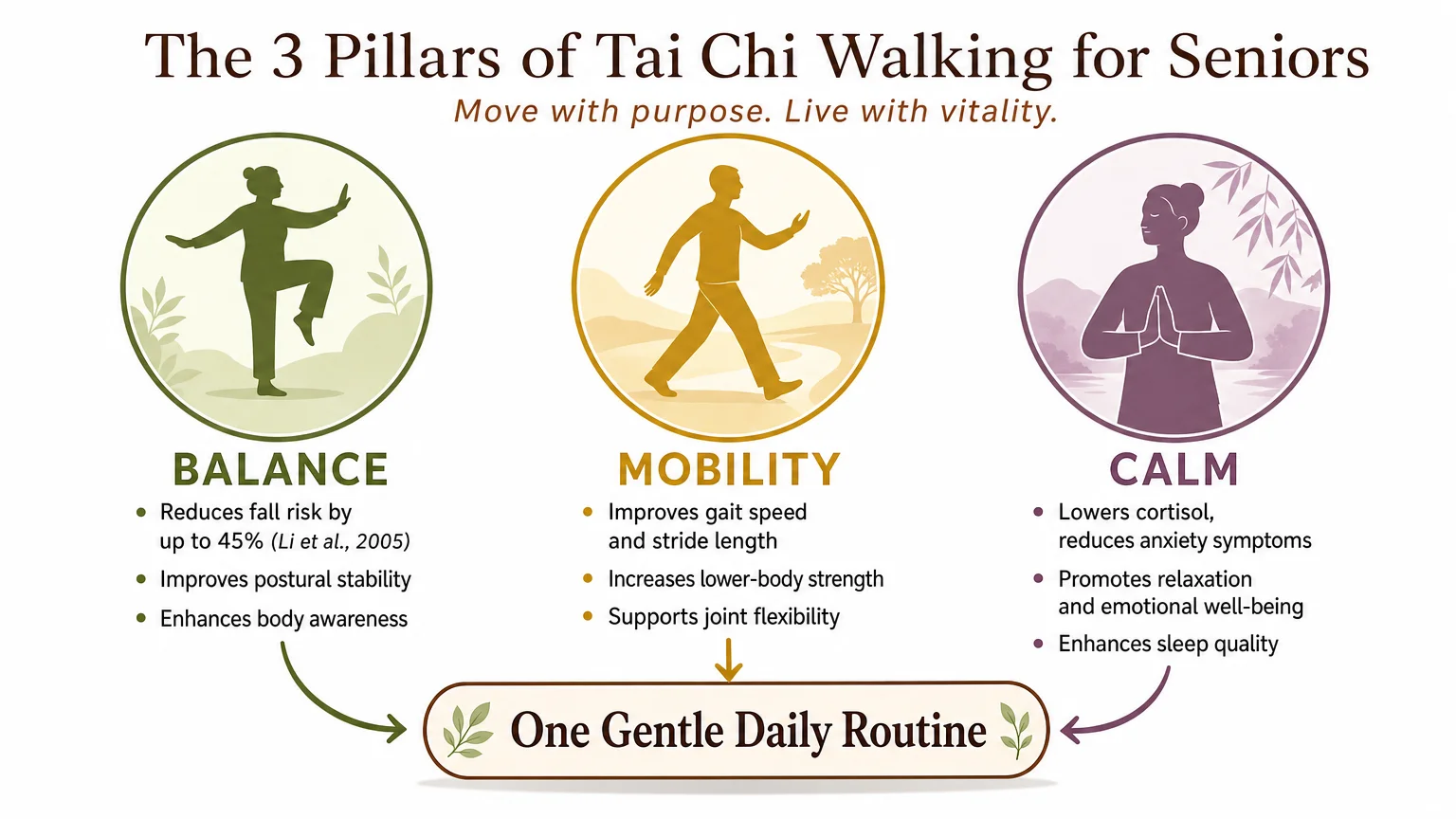
A landmark study published in the New England Journal of Medicine (Li et al., 2005) found that Tai Chi participants reduced their fall risk by 47.5% compared to a stretching control group. More recent reviews have confirmed similar findings across multiple populations. The mechanism is not mysterious: when you practise controlled, slow weight transfer hundreds of times a week, your nervous system becomes better at managing the same transfer when it happens unexpectedly — on an uneven pavement, for example, or when reaching for something on a shelf.
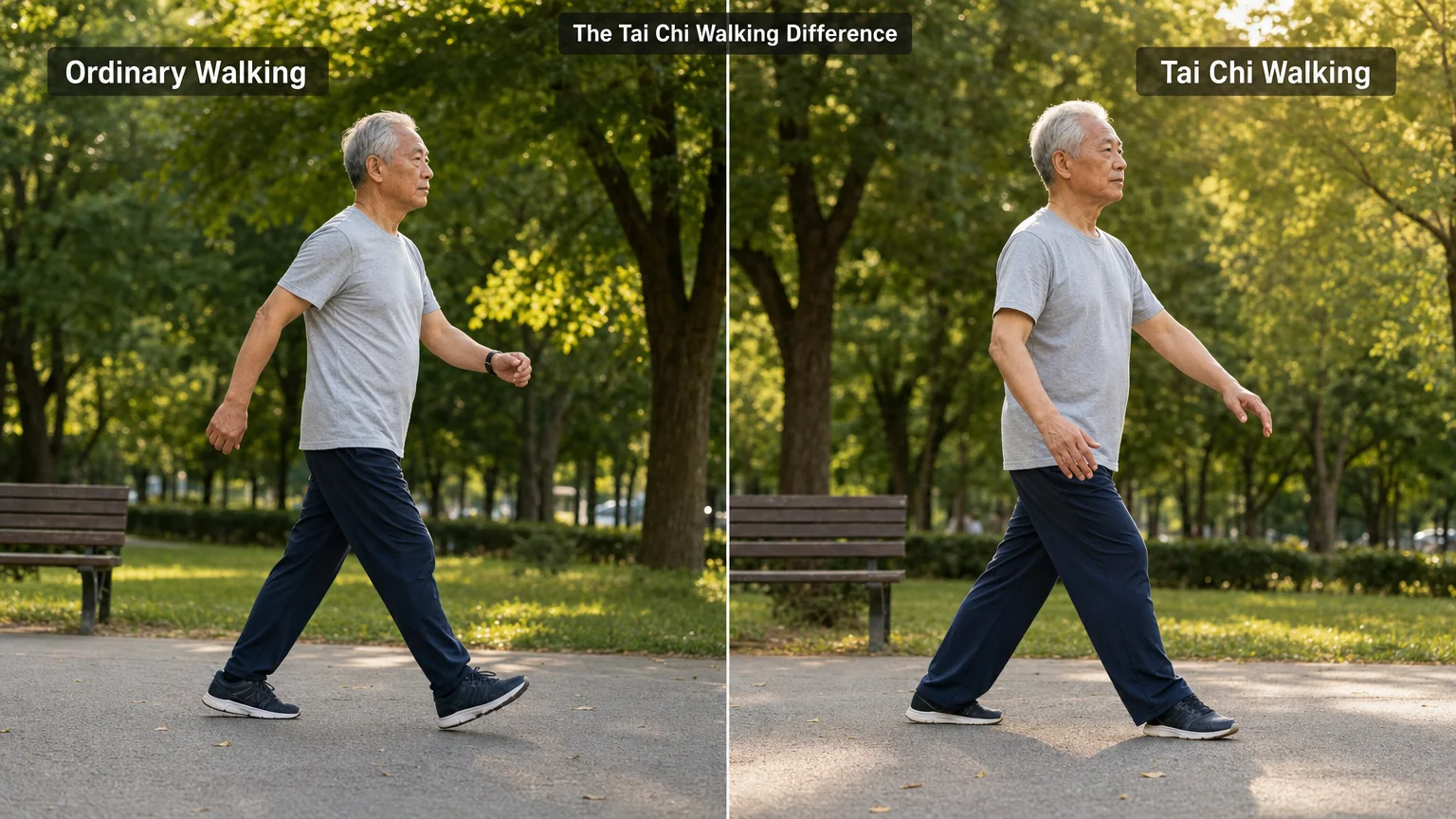
Tai Chi Walking also encourages a lower, more grounded centre of gravity than ordinary brisk walking. Keeping the knees gently soft and the hips relaxed means the body is always slightly prepared to absorb an unexpected shift — a posture that ordinary walking rarely teaches.
What Mobility Benefits Can Seniors Expect From a Regular Routine?
Stiffness is one of the most common complaints among older adults, and it is often self-reinforcing: discomfort leads to less movement, which leads to more stiffness. Tai Chi Walking interrupts that cycle gently. The flowing, continuous nature of the movement keeps hips, knees, ankles, and the lower spine moving through their natural range without the impact stress of jogging or aerobics.
Over weeks of consistent practice, many seniors notice improvements in gait speed, stride length, and the ease with which they rise from a chair or navigate stairs. These gains matter enormously for independence. Research published in the Journal of Aging and Physical Activity has shown that Tai Chi-based movement programmes improve functional mobility scores in older adults, including measures directly linked to daily living tasks.
The arm movements in Tai Chi Walking also contribute to upper-body mobility. Shoulders and the thoracic spine — areas that tend to tighten with age and desk-based lifestyles — benefit from the gentle, rhythmic reach and flow that the practice encourages.
For a practical starting point, A Simple 10-Minute Morning Tai Chi Walking Routine You Can Do at Home offers a beginner-friendly session that can be done in a living room or garden.
How Does Tai Chi Walking Support Mental Calm and Emotional Wellbeing?
The mental benefits of Tai Chi Walking are inseparable from the physical ones. The practice requires a quality of attention that is rare in daily life: not intense concentration, but a soft, sustained awareness of breath, body position, and movement. That quality of attention is, in effect, a form of moving meditation.
Research on Tai Chi and psychological wellbeing consistently shows reductions in anxiety, perceived stress, and depressive symptoms among older adults. A 2021 meta-analysis in Frontiers in Psychology found that Tai Chi interventions produced significant improvements in mental health outcomes across multiple studies. The mechanism appears to involve both the parasympathetic nervous system (activated by slow, rhythmic movement and deep breathing) and the psychological effect of purposeful, mindful activity.
For seniors who live alone or have limited social engagement, the routine itself can become a small but meaningful anchor in the day — something that belongs entirely to them and reliably produces a sense of calm and accomplishment.
How Does Tai Chi Walking Compare to Ordinary Walking for Seniors?
| Feature | Ordinary Walking | Tai Chi Walking |
|---|---|---|
| Pace | Variable, often brisk | Slow and deliberate |
| Balance training | Incidental | Central to every step |
| Mindfulness component | Minimal | Built into the practice |
| Joint impact | Low–moderate | Very low |
| Breathing focus | Unstructured | Coordinated with movement |
| Suitable for limited balance | Partially | Yes, including chair support |
| Mental calm benefit | Moderate | High |
| Learning curve | None | Gentle, beginner-friendly |
Ordinary walking is genuinely good for cardiovascular health, and Tai Chi Walking does not replace it. What it adds is intentionality — a framework that turns each step into a small act of balance training, mobility work, and stress management simultaneously. For seniors who want more from their movement time without working harder, that combination is difficult to match.
How Tai Chi Walking Differs from Ordinary Walking: The Key Principles Explained explores this comparison in greater depth.
Can Seniors Start Tai Chi Walking Safely, Even With Health Concerns?
One of the most reassuring aspects of Tai Chi Walking is how adaptable it is. Seniors with arthritis, osteoporosis, mild heart conditions, or limited standing balance can all participate — often with minor modifications rather than exclusions. Chair-supported versions allow those with significant balance concerns to practise the arm movements and weight-shifting principles while seated or using a chair for stability.
The general guidance is to begin slowly, prioritise posture and breath over speed or range, and build duration gradually. Starting with just five to ten minutes a day is entirely appropriate. A structured 28-day programme can help by providing a clear, progressive path that removes the guesswork about what to do next.
Anyone with a significant medical condition should check with their GP or physiotherapist before beginning any new exercise routine — but for most older adults, Tai Chi Walking sits well within the category of safe, low-risk activity.
Tai Chi Walking for Seniors: How to Start Safely and Build Confidence covers this topic in practical detail.
What Does a Simple Tai Chi Walking Session Actually Look Like?
A basic session does not require a large space or any equipment. Here is what a 10-minute beginner session might include:
- Grounding stance (1–2 minutes): Stand with feet shoulder-width apart, knees soft, spine tall. Breathe slowly and feel the weight distributed evenly through both feet.
- Slow weight shifts (2 minutes): Shift weight gently from left foot to right and back, coordinating with the breath. This alone is foundational balance training.
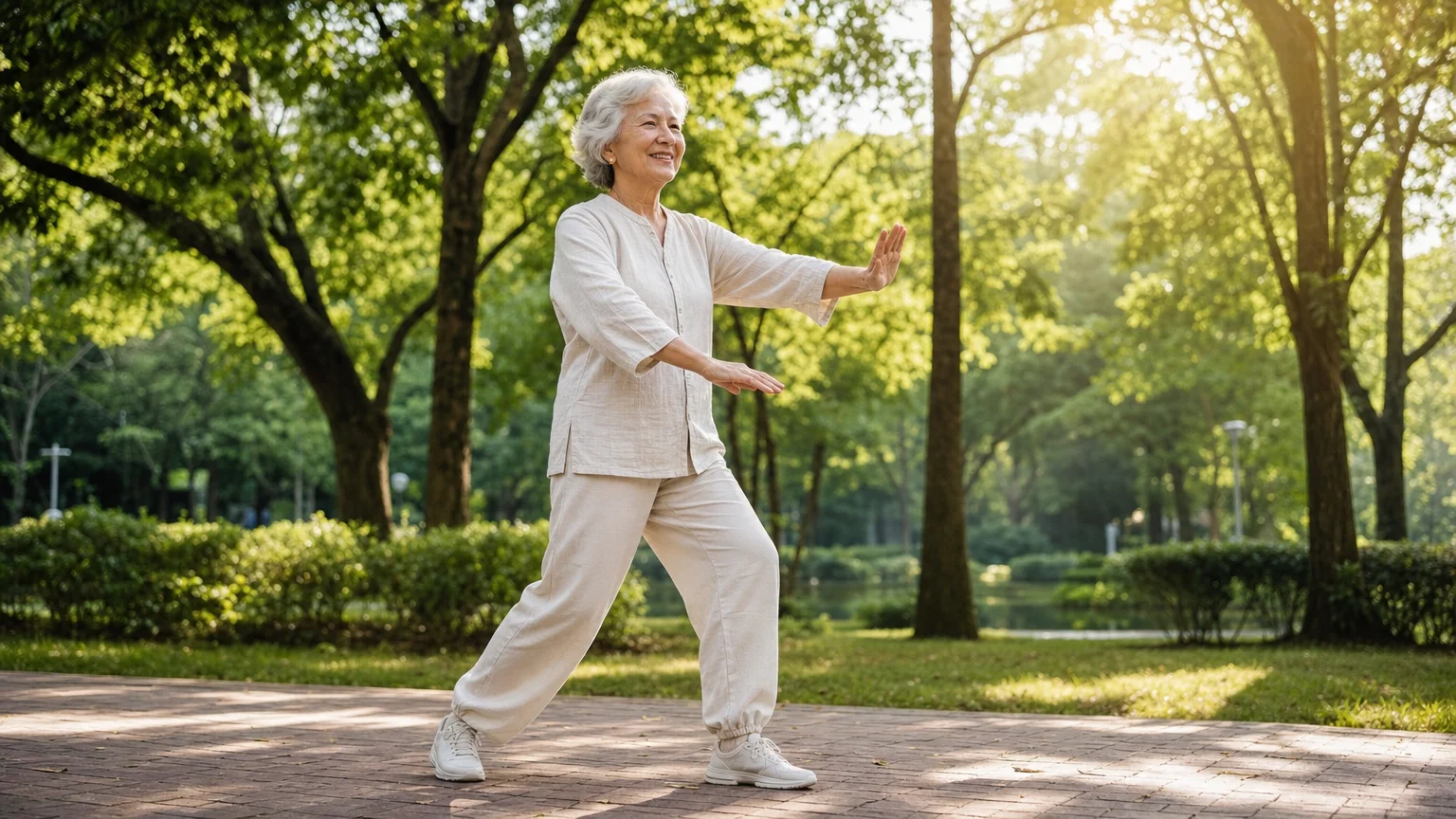
- Tai Chi Walking steps (5 minutes): Step forward slowly, heel first, then roll through the foot. Arms float gently at the sides or rise and fall with each step. Keep the gaze soft and forward.
- Closing breath (1–2 minutes): Return to the grounding stance. Take three slow, deep breaths and allow the arms to float up and settle down with each exhale.
That is the essence of it. The practice grows from there — adding arm patterns, turns, and longer durations as confidence builds.
Some links on this site are affiliate links. If you buy through them we may earn a commission, at no extra cost to you.
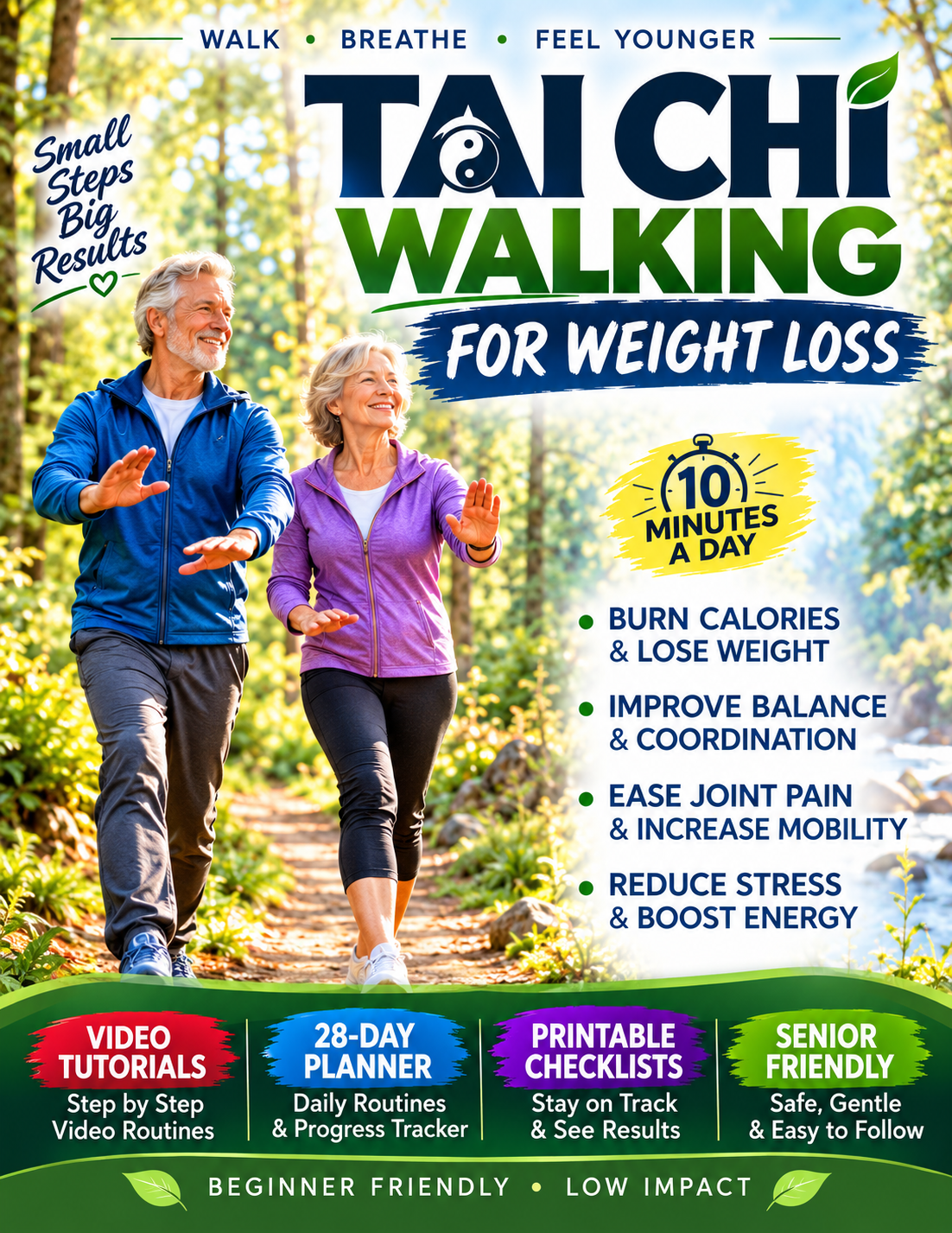
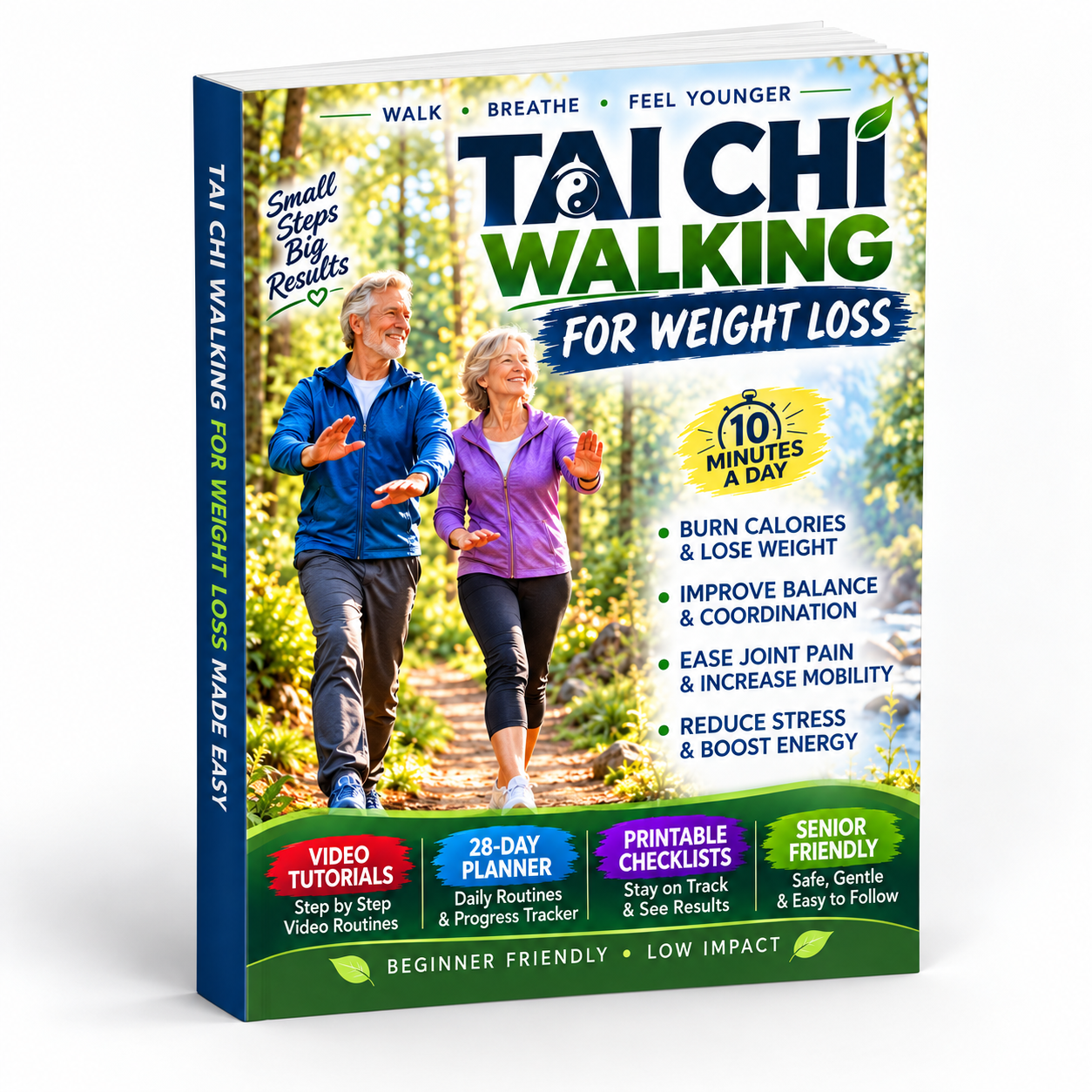
Tai Chi Walking Book
28-Day Illustrated Program for Pain Relief, Better Balance and Improved Mobility in Just 10 Minutes a Day
A Gentle Practice With Real, Lasting Results
The Tai Chi Walking benefits for seniors — improved balance, greater mobility, and a quieter mind — do not require a dramatic lifestyle overhaul to achieve. They accumulate through small, consistent sessions that fit naturally into an ordinary day. Whether you are managing a health condition, recovering confidence after a fall, or simply looking for a gentler way to stay active, this practice meets you where you are.
A good next step is to explore the 28-day programme approach or browse the full blog for more practical guides on getting started. Small steps, taken consistently, add up to something genuinely significant.